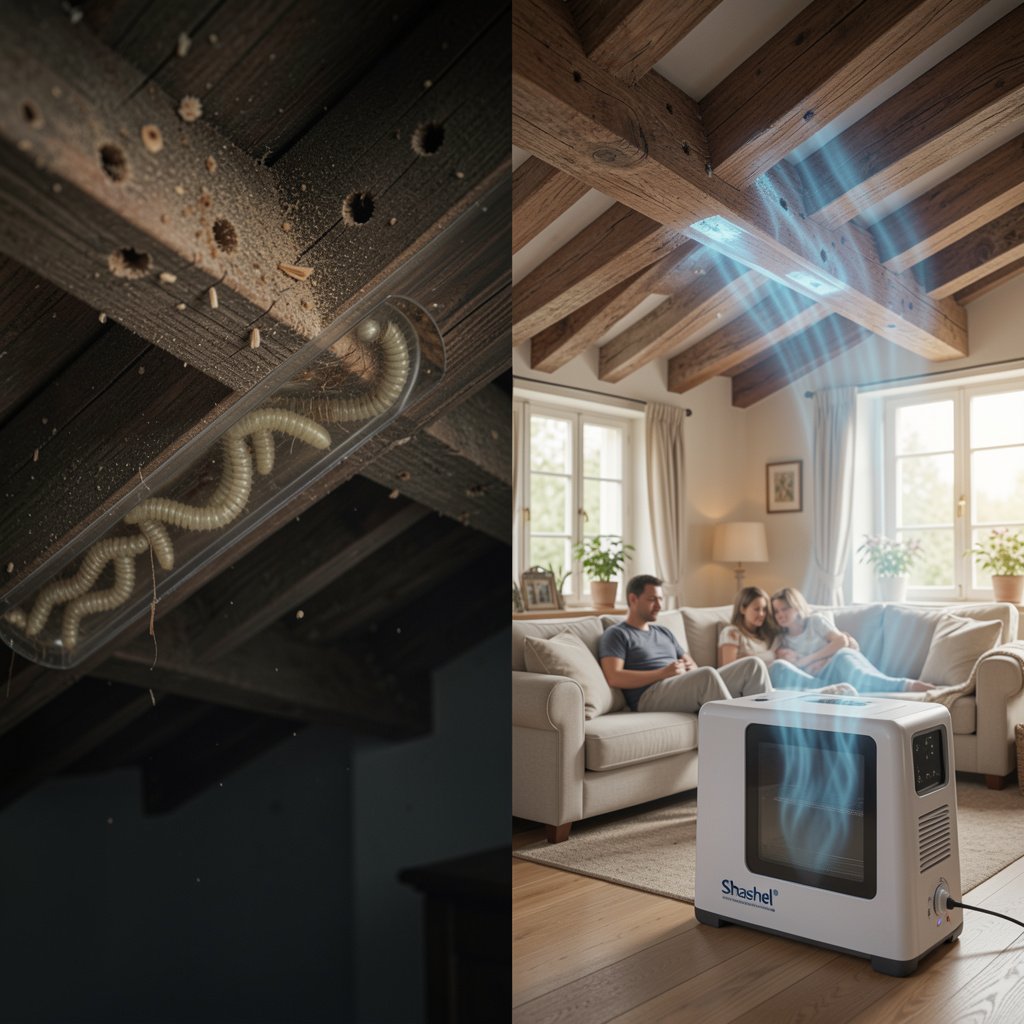
A wooden home is more than just a place to live—it is an investment in comfort, craftsmanship, and natural beauty. Whether it’s a modern timber-frame house, a traditional cottage, or a centuries-old heritage property, wood brings warmth and character that few other building materials can match. However, wood is also vulnerable to one of its oldest enemies: wood-boring insects.
For many years, protecting timber often meant relying on chemical insecticides, wood preservatives, or fumigation. Today, homeowners have another option. Shashel uses carefully controlled non-ionizing microwave technology to eliminate active wood-boring insects without the routine use of chemical pesticides, offering a modern approach to protecting valuable timber.
Why Wooden Homes Need Protection
Wood is strong, durable, and long-lasting when properly maintained.
However, several species of wood-boring beetles can infest timber, laying eggs on or near wooden surfaces. After hatching, the larvae tunnel into the wood and feed on cellulose for months or even years before emerging as adult beetles.
Areas commonly affected include:
- Roof beams
- Floor joists
- Timber framing
- Ceiling supports
- Staircases
- Wooden flooring
- Structural timbers
- Decorative woodwork
Because much of the damage happens beneath the surface, infestations often go unnoticed until visible signs begin to appear.
Recognizing the Warning Signs
Early detection is one of the best ways to protect a wooden home.
Common indicators of a possible woodworm infestation include:
- Small round exit holes
- Fine wood dust (frass)
- Weak or damaged timber
- Adult beetles appearing indoors
- Crumbling wooden surfaces
These signs do not always confirm an active infestation, which is why a professional inspection is an important first step.
Moving Beyond Chemical Treatments
Traditional woodworm treatments have commonly relied on:
- Chemical insecticides
- Wood preservatives
- Fumigation
- Surface sprays
- Chemical injections
While these methods continue to have applications in some situations, many homeowners now prefer solutions that reduce reliance on conventional pesticides.
Microwave technology provides a different approach by targeting the insects themselves rather than coating the wood with chemicals.
How Shashel Microwave Technology Works
Shashel uses carefully controlled non-ionizing microwave energy.
Wood-boring insects naturally contain much more moisture than dry, seasoned timber.
As microwave energy passes through the timber:
- Moisture-rich insects absorb the energy more efficiently.
- Their internal temperature rises.
- Active insects within the treated area can be eliminated.
This process can target:
- Eggs
- Larvae
- Pupae
- Adult beetles present within the treated timber
The treatment relies on established scientific principles instead of chemical toxicity.
What “Chemical-Free Defense” Means
Choosing a chemical-free treatment does not mean compromising on innovation.
Instead, it means using a treatment process that avoids routine application of conventional pesticides during microwave treatment.
This offers several practical advantages:
- No chemical insecticides applied to the timber
- No toxic fumigation gases
- No chemical residues from the microwave process
- Targeted treatment of affected areas
- Reduced dependence on conventional chemicals
For many homeowners, these benefits align with their goals of maintaining a healthier living environment while preserving valuable wood.
Protecting the Character of Your Home
Many wooden homes feature original construction details that cannot easily be replaced.
These may include:
- Handcrafted beams
- Timber framing
- Decorative ceilings
- Wooden staircases
- Historic flooring
- Antique wood features
Preserving these elements is often just as important as eliminating the insects themselves.
By focusing treatment on active infestations, Shashel supports the conservation of original timber whenever it remains suitable.
Suitable for Modern and Historic Properties
Microwave treatment is not limited to one type of building.
It can be used in:
- Family homes
- Holiday cottages
- Timber-framed houses
- Historic buildings
- Museums
- Churches
- Commercial properties
- Agricultural buildings
Each property is assessed individually so that the treatment plan reflects the building’s construction, timber condition, and infestation level.
Why Prevention Still Matters
Even after a successful treatment, protecting timber requires ongoing care.
Good maintenance practices include:
- Repairing roof leaks quickly
- Fixing plumbing leaks
- Improving ventilation
- Controlling indoor humidity
- Inspecting timber regularly
- Investigating new signs of woodworm activity
These simple steps help reduce the conditions that encourage future infestations.
Built on Science, Not Chemicals
Microwave treatment is based on well-established physical principles.
It uses non-ionizing microwave energy, which differs fundamentally from ionizing radiation such as X-rays or gamma rays.
During treatment:
- No radioactive materials are involved.
- The timber does not become radioactive.
- The energy is applied only while the equipment is operating.
- The process targets moisture-rich insects hidden within the wood.
Understanding these principles helps homeowners appreciate why microwave technology has become an increasingly popular option for wood preservation.
A Smarter Way to Protect Timber
Modern homeowners are looking for solutions that balance effectiveness with sustainability.
Microwave technology supports this goal by offering:
- A chemical-free treatment process
- Targeted elimination of active wood-boring insects
- Preservation of original timber
- Reduced reliance on conventional pesticides
- Professional treatment tailored to each property
Rather than treating every piece of wood unnecessarily, the focus is placed on the areas where active infestations are identified.
Looking Toward the Future
Wood preservation continues to evolve as technology advances.
The industry is increasingly adopting solutions that emphasize:
- Precision
- Sustainability
- Preservation of existing materials
- Reduced chemical use
- Long-term protection of valuable timber
Shashel reflects this progress by combining established scientific principles with professional engineering to help homeowners protect their wooden homes in a modern, environmentally responsible way.
Conclusion
Your wooden home deserves protection that preserves both its beauty and its structural integrity. While every woodworm infestation requires an individual assessment, microwave technology provides a modern alternative to routine chemical pesticide treatments by targeting active wood-boring insects hidden inside timber.